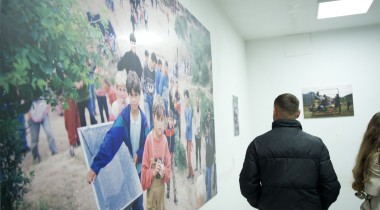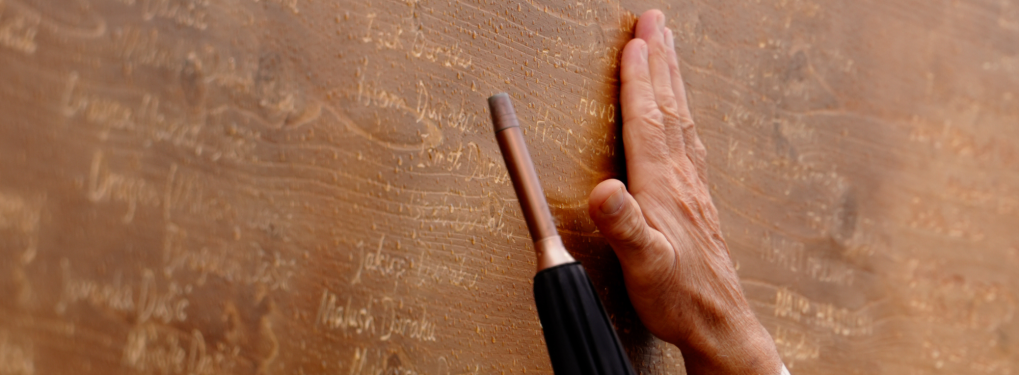
After a long work process, on the International Day of the Disappeared, August 30, 2025, the memorial “Tree of Lives” was inaugurated.
A public work as a proposal for continuous engagement, where memory cannot be confined to the past but must be lived and inhabited.
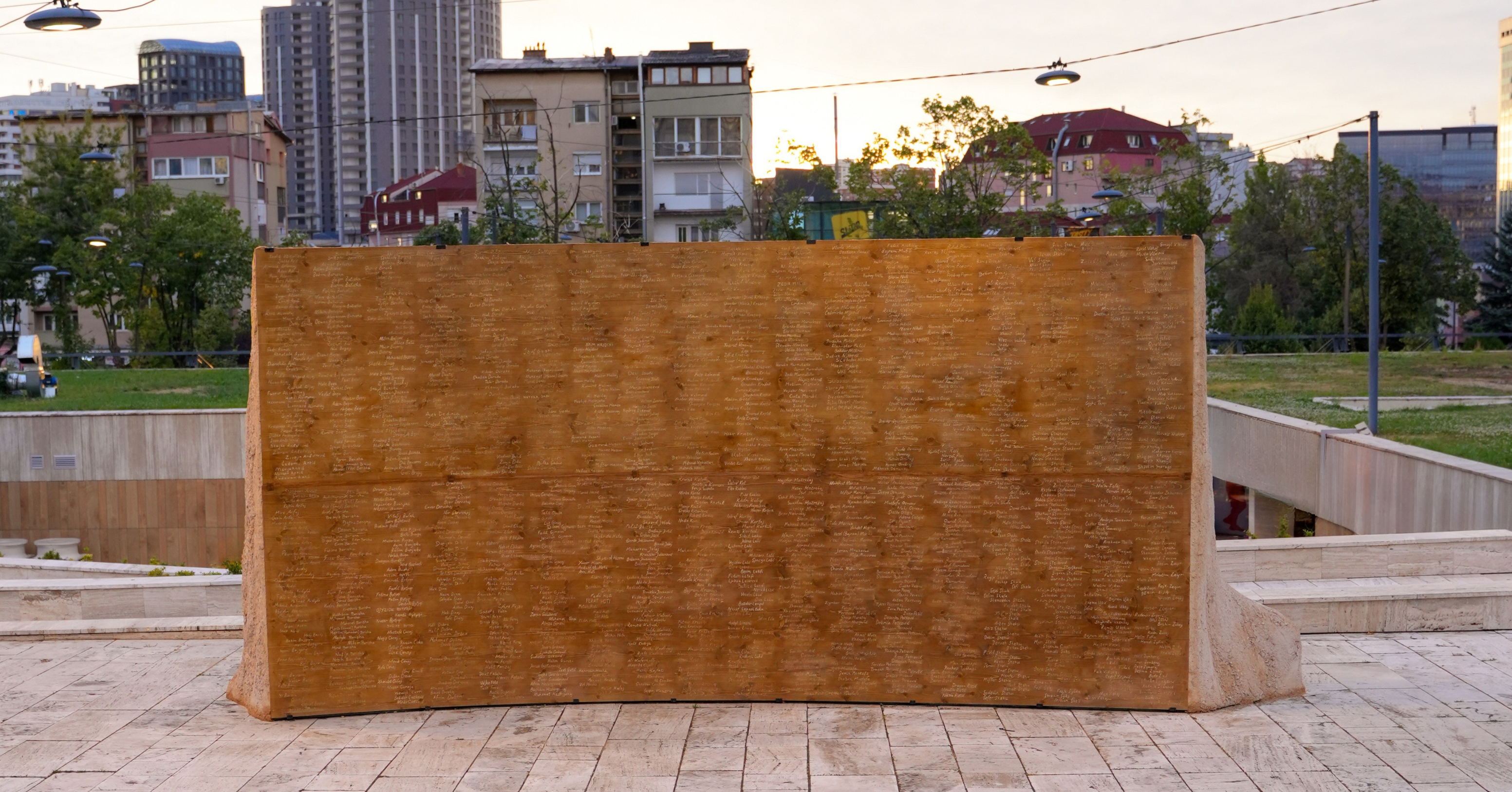
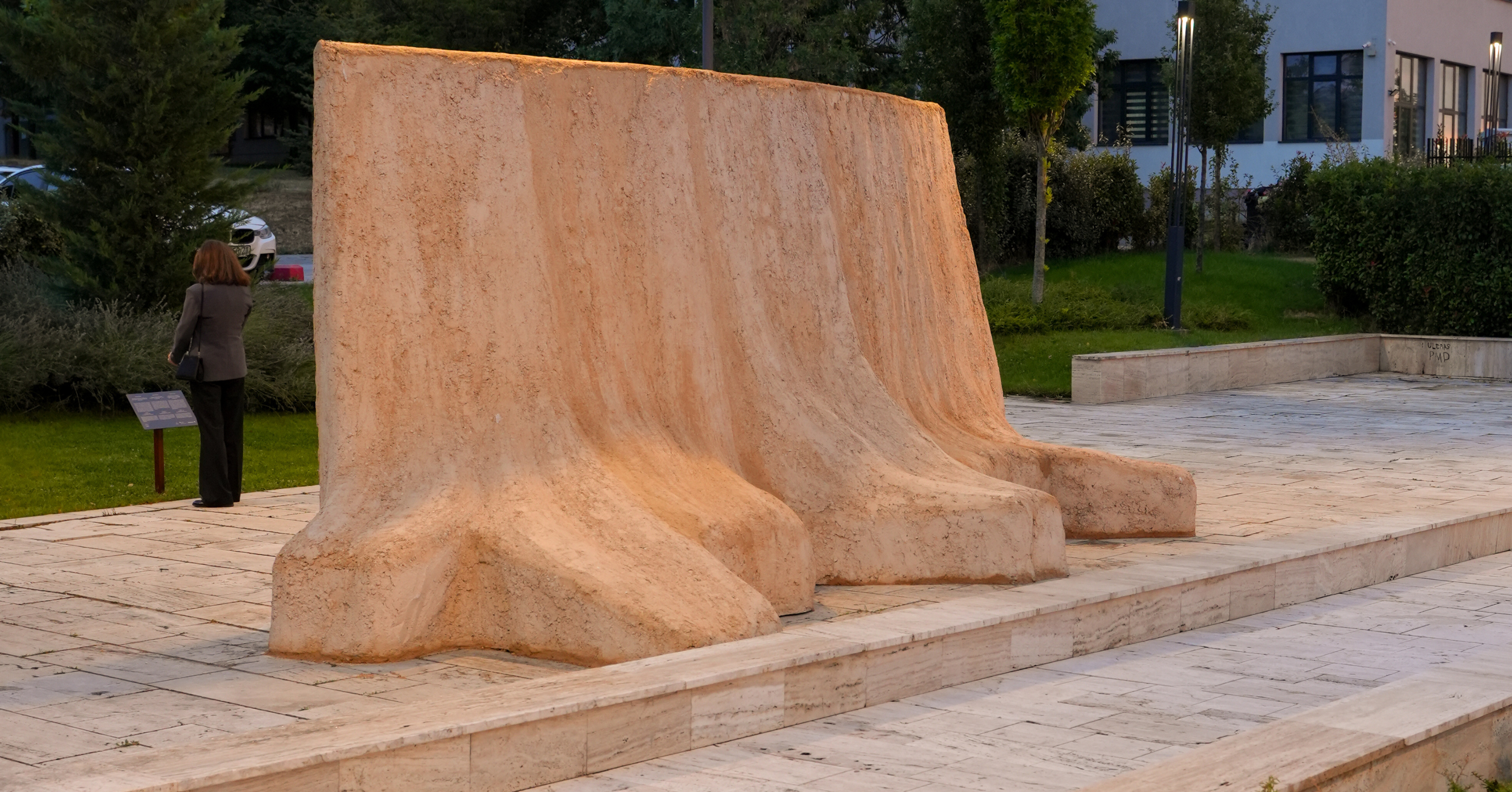
The concept is tied to the symbolism of the family tree, which connects generation after generation, the past and the present. For artist Dea Gjinovci, this work carries a personal dimension, as her grandmother’s name is among those inscribed on the memorial—still listed among the disappeared as a result of the war in Kosovo (1998–2000). She emphasized that her story reflects the experiences of many families still searching for answers.
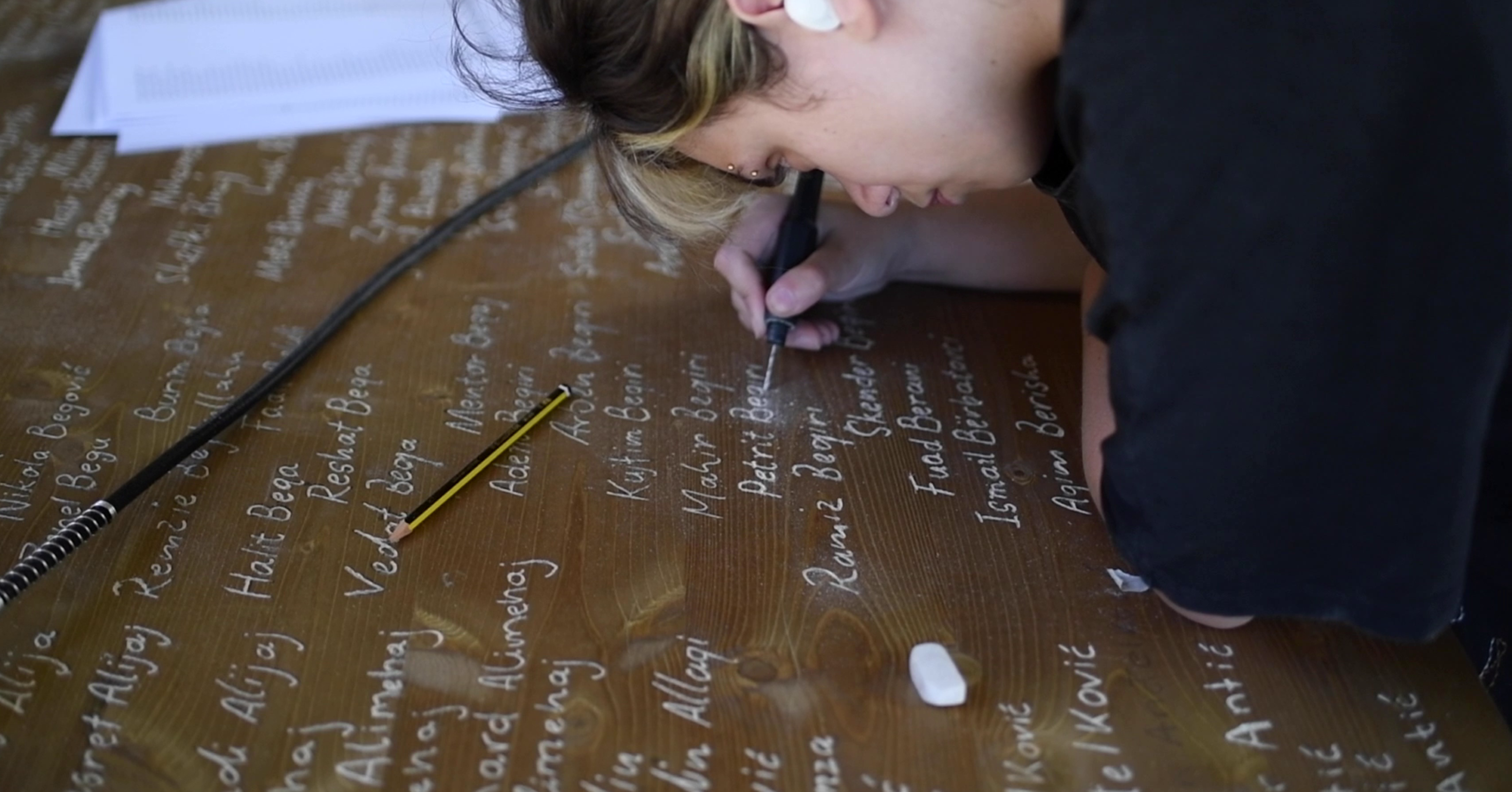
During the realization of the project, an open call was extended to all families of persons missing as a result of the war in Kosovo to be a part of the creation process. Many family members came to the workshop and wrote the names of their loved ones with their own hands.
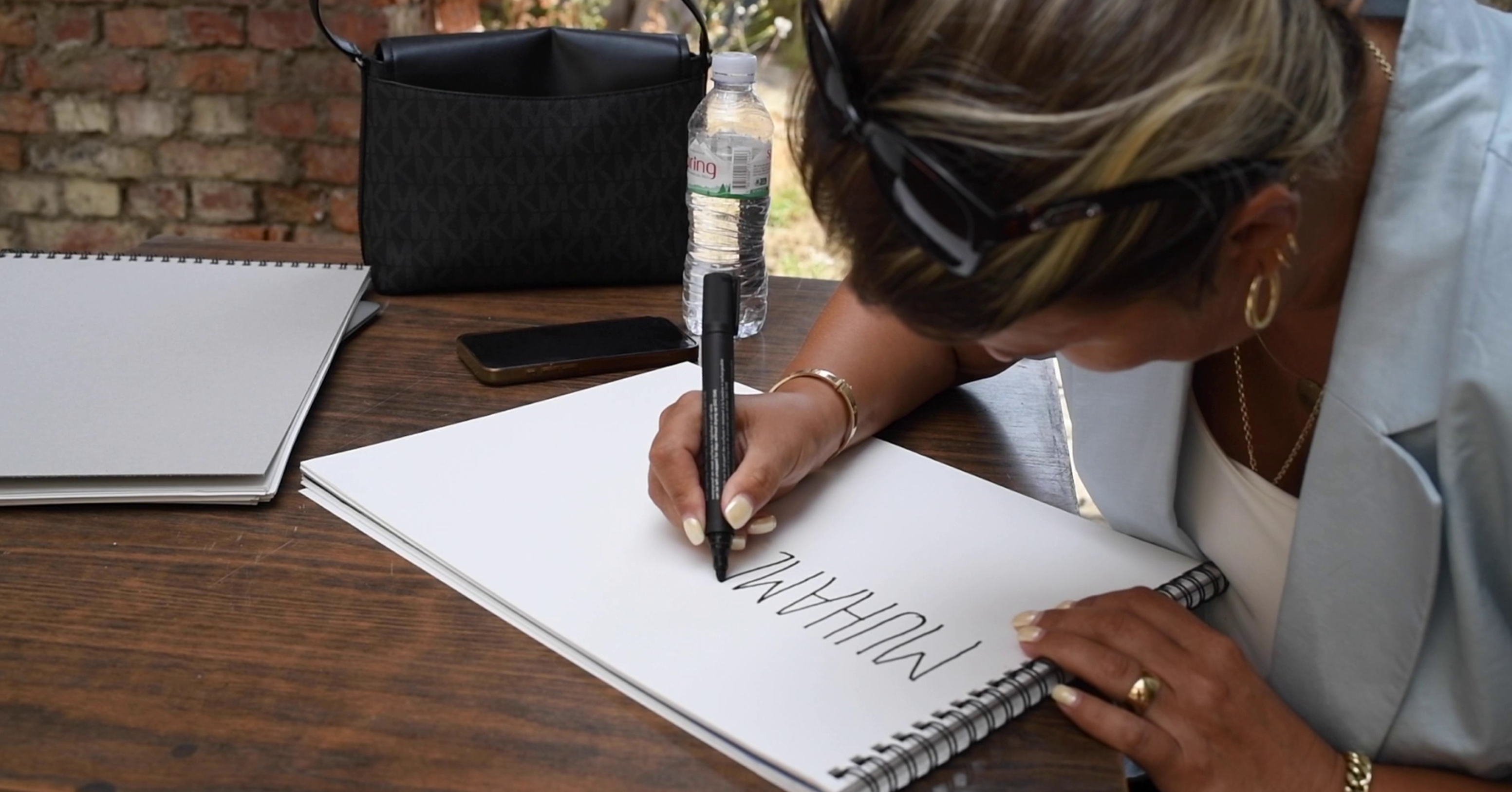
This memorial was inaugurated for the public on August 30, 2025, giving us all the opportunity to share the silence, each other's presence, but also the presence of absence.
The memorial is now located on the platform above the underground parking lot (near George Bush Square), Pristina, Kosovo.
During the inauguration, Bekim Blakaj, Director of the Humanitarian Law Center Kosovo, highlighted the organization’s long-standing dedication to documenting the fate of the disappeared and keeping their memory alive.
“This memorial is not just a work of art,” he said, “but a permanent space for our society not to forget.”
Blakaj thanked the families for their trust and for sharing their pain, as well as all the partners who helped realize the project. He described the “Tree of Lives” as a place of reflection, but also a place that calls for justice and accountability.
The memorial was widely welcomed as a valuable contribution to Kosovo’s culture of remembrance. It is not only a tribute to the disappeared, but also a public call for the past not to be covered in oblivion, and for injustice never to be repeated.
The Mayor of Pristina, Përparim Rama, stated that this artwork does not heal the pain, but gives it a voice. He described the “Tree of Lives” as a meeting point of collective memory, calling on us not to allow remembrance to remain only in the hearts of family members, but to become part of our shared consciousness.
“The names engraved here are more than letters on wood; they are a public memory where every life has a name and identity,” said Rama, emphasizing that their absence is a wound that does not fade, but through this memorial becomes a call not to forget and to seek justice.
The “Tree of Lives” memorial is a public space, open to everyone. We invite you to visit and pause for a moment of reflection by the engraved names.
This memorial was realized by the Humanitarian Law Center Kosovo in partnership with the Missing Persons Resource Center and was supported by the European Union Office in Kosovo and Swiss Federal Department of Foreign Affairs.